





Women Entrepreneurs Powering Rural India

Women Empowerment

Women play a crucial role in India’s economy, yet they face persistent challenges in entrepreneurship. Despite financial, social, and technological barriers, many have carved successful paths, reshaping rural industries. This article highlights key challenges, success stories, and policy recommendations to strengthen women’s participation in agriculture, fostering economic growth and social transformation.

Author

Nilima Revade,

Executive, CSR
Bajaj Auto Ltd.

The Landscape of Women in Agriculture

In the last decade in particular, India’s economy has witnessed significant growth, accompanied by a very pronounced surge in new startups and businesses. Despite these, the agricultural sector remains vital, not just for food security but also as a major employment source. Rural India, in particular, depends heavily on agriculture, with 84% of women relying on it for their livelihoods. Despite such a glaring state, women continue to face disadvantages, including lower wages, limited land ownership, and restricted access to institutional and financial support.

According to the National Sample Survey Office (NSSO), while women constitute 46% of India’s agricultural workforce, only 13% of rural women engage in entrepreneurship. While it’s heartening to note that women on the one hand run agriculture-related businesses such as farming, food processing, and handicrafts, on the other, a discomforting reality are the numerous roadblocks that they need to scale in order to sustain and scale their ventures. These obstacles range from limited financial access to gender biases and technological barriers.

Drawing from my decade-long experience in the development sector and my entrepreneurial journey in import-export, I have witnessed firsthand the struggles faced by women entrepreneurs. Through my interactions with them, certain recurring themes in the nature of challenges have emerged. Key among them are:
Women in Agriculture: Key Facts

46%

of India’s agricultural workforce comprises women.

13%

Only 13% of rural women own enterprises.

84%

84% of rural women depend on agriculture for their livelihoods.

Major Challenges Faced by Women Entrepreneurs

01

Financial Constraints

Limited access to collateral, banking support, and credit restricts growth.

02

Social Barriers & Gender Norms

Household duties and safety concerns limit mobility and business opportunities.

03

Limited Market Access

High logistics cost and lack of networks reduce access to urban markets.

04

Lack of Mentorship

Rural women rarely receive business guidance or strategic mentorship.

05

Limited Training Access

Digital skills, finance training, and leadership development remain low.

Challenges Faced by Rural Women Entrepreneurs

A deeper look into the barriers that slow down women-led rural enterprises.

01

Financial Constraints

Securing capital at the right time remains one of the biggest hurdles for women entrepreneurs. Many lack access to funds due to absence of collateral, restrictive bank policies, and the need for male co-applicants. Without a strong financial base, investment in technology, expansion, and sustainable practices becomes difficult. Limited resources slow down — and sometimes completely block — growth.

02

Social Barriers & Gender Norms

Deep-rooted social expectations assign women primary responsibility for childcare, cooking, cleaning, and maintaining relationships. This leaves them with little time or freedom to run businesses. Safety concerns also restrict how far and how long they can travel. These limitations reduce networking and market exploration opportunities.

46%

of India's agricultural workforce are women

13%

of rural women own enterprises

84%

depend on agriculture for livelihood

03

Market Access Limitations

Even when women manage their businesses successfully, society still expects them to prioritize family first. Safety restrictions limit their mobility, reducing opportunities for networking and market visits. High transport costs and dependence on middlemen reduce their profit margins. Lack of networks and negotiation skills also prevents them from reaching high-paying urban markets.

Women constitute 46% of the agricultural workforce but own only 13% of enterprises.

04

Lack of Mentorship & Networking

Networking is essential for scaling a business, but rural women rarely find access to such opportunities. Attending exhibitions, events, and summits requires money, travel, and time — all of which are difficult for them. Safety concerns and language barriers further discourage participation. This results in limited exposure to business strategies, investors, and collaboration opportunities.

01

Financial Constraints

Securing capital at gainful terms and at the right time remains one of the biggest hurdles for women entrepreneurs. Many lack access to funds due to factors like absence of collateral, restrictive bank policies, and the requirement for male co-applicants. Without a firm financial backing, investing in business expansion, technology, and sustainable practices becomes nearly impossible. Limited financial resources thus hinder their ability to compete effectively, leading to slower or sometimes zero growth.

02

Social Barriers & Gender Norms

Women entrepreneurs often face India’s deeply-ingrained societal expectations that assigns them low-end domestic responsibilities, that revolved around keeping children, relations, cooking and cleaning and general household upkeep. It leaves them with little time for business. Even when they succeed, the expectations remain that they prioritise family over their ventures. Additionally, concerns about their physical and bodily safety restricts their mobility to certain places only at certain times of the day. Put together, such limitations severely restricts opportunities for networking and market expansion. The double burden of household duties and business responsibilities places an immense strain on them which invariably leads them to choose the easier and more known alternative, i.e., household chores.

03

Market Access Limitations

Reaching India’s more meaningful urban markets is yet another and a significant challenge. Due to high transportation costs and invariable reliance on intermediaries, women entrepreneurs struggle to sell directly in metro cities where the cream of most societies exists, leading to reduced profits. Many lack the necessary networks, negotiation skills, and market knowledge to establish strong connections with buyers and distributors leading to their undercutting their own prices and worth.

04

Lack of Mentorship & Networking Opportunities

Networking is crucial for business growth, yet many women entrepreneurs, and more so from rural areas lack access to professional and meaningful connections. Attending summits, exhibitions, and business delegations requires time and financial investment, which is often out of reach of rural women. Additionally, concerns about their physical safety and language barriers further limits their ability to participate effectively. In the absence of gainful mentoring, women entrepreneurs miss out on crucial guidance, funding opportunities, and strategic partnerships.

05

Limited Access to Training & Capacity Building

Traditional gender roles in the Indian households, and in rural areas where agriculture remains prevalent often restrict women’s access to education and professional training. Many are unaware of available entrepreneurship development programs, preventing them from gaining the skills required for business success. Financial literacy, digital marketing, and leadership training remain areas where women need more structured support.

06

Challenges in Building a Competent Team

Finding and building a skilled and dedicated team remains a challenge. To scale a business, a strong team comprising accountants, marketing professionals, and operations managers is essential. However, women, and more so those in the agriculture sector struggle to find the right people, leading to inefficiencies in business operations besides very slow growth.

07

Limited Awareness of Government Schemes

Although most governments in India offer a range of schemes to suite every need, many women entrepreneurs remain unaware of available grants, subsidies, and low-interest loans. As a result, they rely on expensive private loans or self-financing, which slows business growth besides putting enormous strain on their abilities.

08

Technological Barriers

Women entrepreneurs, especially in rural areas, have low digital literacy and very limited access to digital tools. High costs associated with modern machinery, e-commerce platforms, and digital marketing tools prevent them from leveraging technology to enhance their businesses.

09

Lack of Role Models

The absence of visible and relatable female mentors and those who have acquired the right trajectory makes it difficult for aspiring women entrepreneurs to envision success. Mentorship plays a crucial role in providing guidance, boosting confidence, and enabling informed decision making. Without role models, women in rural settings struggle to sustain their ventures in the long run.

Inspiring Success Stories

Despite these rather obvious challenges, there is a whole clutch of women entrepreneurs who have battled the odds and emerged winners and game changers across industries. Their determination, resilience, and innovative thinking have paved the way for success — not of themselves but also of those they inspire. I mention a few below.

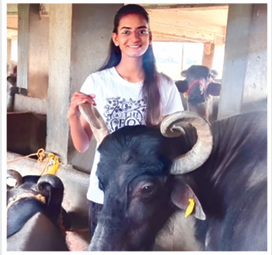
  • Shraddha Dhawan

    Shraddha Dhawan (Maharashtra)

    Transformed her father’s stalled buffalo trading business into a ₹1 crore dairy enterprise, selling 350+ litres of milk daily and earning significant income through vermicompost.

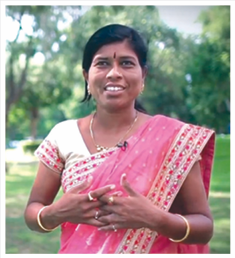
  • Kamal Vishnu Kumbhar

    Kamal Vishnu Kumbhar

    Started with just a ₹1,40,000 loan and built a multi-faceted agribusiness generating ₹30 lakhs annually. Awarded nationally for her rural entrepreneurship success.

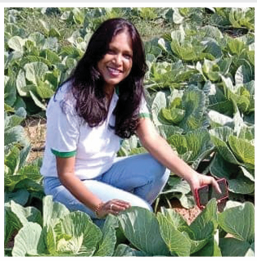
  • Girija Papanna

    Girija Papanna

    Transitioned from a visa officer career to launching an international organic farming export company, exporting produce to UAE, Oman, Sri Lanka, and more.

Strategic Recommendations for Strengthening Women’s Entrepreneurship

To create a more inclusive and empowering environment for women to flourish in the agriculture sector, policymakers, industry leaders, and women entrepreneurs must collaborate on multiple fronts. These include:

Policy Implementation and Monitoring: Government schemes must be better implemented and tracked to ensure benefits reach the right beneficiaries.

Women Excellence Centres: Establishing one-stop resource hubs for training, financing, and networking will streamline women’s access to entrepreneurial support.

Recognition and Awards: Increased visibility through national recognition and industry awards to motivate more women to enter business.

Capacity Building and Digital Training: Women need structured business, finance, and technology training to remain competitive in evolving markets.

Increased Funding and Financial Inclusion: Special loan schemes and alternative financing models should be made more accessible to women entrepreneurs.

The Way Forward

Women entrepreneurs are breaking barriers and making significant contributions to India’s economic growth. However, to fully harness their potential, supportive policies, financial inclusion, and better infrastructure are necessary. If India increases women’s participation in entrepreneurship, it could create 30 million women-led enterprises and generate 150 to 170 million jobs. Additionally, India’s GDP growth could rise by 1.5 percentage points by integrating 50% of women into the workforce.

Through my own journey in import-export, I have experienced these challenges firsthand but have also witnessed the transformative power of mentorship, training, and persistence. By fostering a supportive ecosystem, we can ensure that women entrepreneurs continue to thrive, innovate, and lead India into a brighter future.

References

1. Deepali Sharma, Tanya Goel & Jayant Kumar Roy, MARCH 07, 2023, Women Entrepreneurship: Shaping the Future by Invest India.
2. ISHITA MEHROTRA, January 21, 2020, Is having more women in agriculture a good thing?
3. Gender Justice by 15 Nov, 2018, Move over 'Sons of the soil': Why you need to know the female farmers that are revolutionizing agriculture in India.
4. Sucheta Agarwal, Usha Lenka, 9 July 2018, Why research is needed in women entrepreneurship in India: a viewpoint.
5. Dr Bhimaraya Metri, 29 March 2022, Women are key to agriculture entrepreneurship: Metri.
6. @OCOD 2021, Strengthening women’s entrepreneurship in agriculture in Asian countries.
7. Highlights of the Sixth Economic Consensus 2014, Ministry of Statistics and Programme Implementation.
8. Sabrina Korreck, September 2019, Women Entrepreneurs in India: What is Holding Them Back?
9. Anna Roy, Oct 2022, Decoding Government support to women entrepreneurs in India.
10. Purvi Mehta, Mar 17, 2022, Empowering India’s women farmers: Bridge the gap.
11. UN Women, 28 Feb 2022, Five ways to build gender equality and sustainability.
12. Geeta, Kotikelapudi 2020, Development of women entrepreneurship in Vizianagram district.
13. Mohammad Kazim Karimi 2020, Role of Women in Rural Entrepreneurship development.
14. Kapse, G. P. 2001, An analytical study of women entrepreneurship in Marathwada region.
15. Shinde, Manisha R 2002, A Study on emergence and development of women entrepreneurship in Kolhapur district.
16. Babu, Krapa Kishore. 2015, An analysis on empowerment of rural women through entrepreneurship.
17. July 2021, Draft national policy for micro, small & medium enterprises (MSME) in India.
18. Jul 28, 2022, Role Of Women in Agriculture in India, Team Her Circle.
19. 2021-22, Success stories of progressive women farmers and Agripreneurs.
20. Ms. Yogita Sharma, Dec 2013, Women Entrepreneur in India.
21. Unit-III - Women Entrepreneur: Nature, Definition, Features and Indian perspectives.
22. Akanksha Khullar, MAY 10, 2023, The Changing Face of India's Entrepreneurial Landscape.
23. Anjun Gupta, Mar 08, 2023, Indian women entrepreneurs: Breaking barriers & achieving success.
24. Shruti Mohan, June 11, 2018, drought-hit Maharashtra women entrepreneurs success stories.
25. Team 30 sheds, 15 Oct 2023, Five rural women entrepreneurs scripting success stories.
26. P.Sai Charitha Veenita Kumari, 2023, Documentation of Women Leaders & Agri start-ups.

Breaking Barriers Today, Leading Tomorrow

Challenges Faced by Women Entrepreneurs

  • Financial Barriers: limited access to capital and restrictive bank policies.
  • Social Norms: Gender biases and household responsibilities hinder business growth.
  • Market Access Issues: high transportation costs and lack of direct market reach.
  • Limited Mentorship: Scarce networking and training opportunities.
  • Technology Gap: low digital literacy and restricted access to modern tools.
  • Lack of Awareness: Many women are unaware of available government schemes.

Path to Progress

  • Policy Implementation and Monitoring: Strengthening the reach of government schemes.
  • Women Excellence Centres: training, financing, and networking under one roof.
  • Recognition and Awards: Motivating women through national visibility.
  • Financial Inclusion: Special loan schemes and funding opportunities.
  • Capacity Building: training in finance, technology, and digital marketing.

Potential Impact

30 million

new women-led enterprises

170 million

jobs created

1.5%

increase in India’s GDP by integrating women into the workforce